
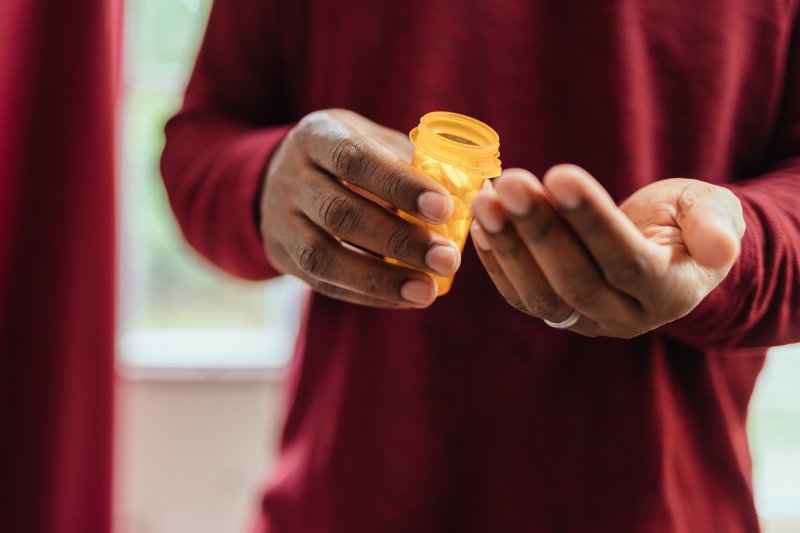
If you’ve ever read the fine print on a prescription bottle, you usually find side effects like drowsiness or nausea. But for hundreds of common medications, tooth decay should really make the list. There are nearly 400 prescriptions and over-the-counter drugs that have been linked to an increased risk of cavities, and it’s hardly ever advertised. Here’s how it happens, what medications to watch for, and how your dentist can help with preventive dentistry strategies.
The Common Thread: Dry Mouth
Most medication-related tooth decay comes down to one side effect: dry mouth, also known as xerostomia. Saliva is one of the largest contributors to your oral health, and many people have no idea that’s the case. It washes away food particles, neutralizes harmful acids, and helps prevent bacteria from taking hold.
So, when a medication reduces saliva production, it strips away this natural defense system, leaving your teeth more vulnerable.
What Kinds of Medications Cause Dry Mouth?
Antihistamines
Common allergy medications, including many available over the counter, are well known for causing dry mouth. Because they’re often used seasonally or as needed, you may not realize that they’re the reason you feel parched.
Antidepressants and Antianxiety Medications
Saliva flow is part of your parasympathetic nervous system, which uses various neurotransmitters to talk to your brain and give your body instructions. Antidepressants block some of these, essentially telling your body to jam the “produce saliva” signal.
Blood Pressure Medications
Certain antihypertensives, including some beta-blockers and diuretics, are also associated with reduced saliva flow. These also alter the chemistry in your body, producing the same effect for different reasons. For example, diuretics force your kidneys to flush out extra sodium and water, lowering the overall fluid content in your body.
Pain Medications
Prescription opioids, muscle relaxants, and certain chronic pain medications are well known for causing dry mouth. These also block parasympathetic signals and can lead to chronic dry mouth if overused.
Antacids
Chewable antacids are often chalky and can make your mouth feel dry (they’re also often flavored with sugar for a double-whammy of tooth decay). Others actually block histamine receptors, causing the same effects as antihistamine medications.
What Can You Do About It?
If you take any of these medications regularly, mention them at your next dental visit. Your dentist can help you manage dry mouth with strategies like sipping water throughout the day, using sugar-free gum or lozenges to stimulate saliva, and applying prescription-strength fluoride when needed. Fortunately, in most cases, switching medications isn’t necessary to protect your smile.
About the Practice
At Silfa Dental, Dr. Silfa and Dr. Koutsoubis help patients manage their smiles to help prevent issues like dry mouth and tooth decay. If you take medications that may be affecting your smile, don’t hesitate to reach out to us for guidance. We can save you time, money, and stress when it comes to your smile. Call (631) 651-1322 to schedule your visit today.


